The “Mea Culpa” of Émile Cartailhac was expressed twice: first, in the paradigmatic article published in the journal L’Anthropologie in 1902, where his retraction adopted an exculpatory tone; and later, in the intimacy of a domestic setting—around a small table in the home of María Sanz de Sautuola—when the man who had judged so harshly could no longer sustain the gaze of the woman whose father he had buried under the stigma of imposture and disgrace. Both episodes—the public and the private—reveal not only a turning point in the ethics of modern scientism but also the way in which scientific discourse manages to assert itself, even in its rectifications, through the fissures of reason.
The posthumous vindication of Marcelino Sanz de Sautuola against the discredit cast upon his discovery by academic archaeology stands as one of the clearest examples of how, already in the twentieth century, ethical discourses began to be absorbed into the rational paradigms of the technologies of history. A discursive transition that not only repairs but also legitimizes—through its own transformation—the very errors it once sustained.
Before history, scientific discourse appears veiled by its own structure: a tautology unfolding from the affirmation of a communal self; of a time exempt from chronology; of a voice that passes through multiple open mouths; of a handwriting both insensitive, translucent, and deaf. Its apparent transparency is, in truth, a form of opacity: a syntax of authority and eroticism that imposes itself even as it conceals its own power.
As discourse, the thought that hovers over history responds to a regime of deduction—to a margin of reading and interpretation that turns into evidence what has been imagined as proof. Yet the historical margins that articulate the chronography of human activity rarely appear as legible. And thus, rarely are we truly called to read history.
From time to time, we may stumble upon it—those of us able to access its recesses, at least. For we cannot deny that the thresholds of history are often barred to those who lack the mediation of a nearby, illuminated testimony capable of casting light beyond the barriers of the threshold. A semiotic witness, bearer of traces, enabling a situated reading of time—a marrow torch.
Historical thought, as we have inherited it from the Enlightenment’s scientistic legacy of the eighteenth century, is nothing more than a system of unfolding: an ordered framework that seeks to translate the complexity of lived experience through operations of recording, archiving, and interpretation. Yet that very claim to clarity is also a device that opens meanings even as it closes them.
Thus, within this system of concealment and veiling, Manuel Minch unfolds a series of semiotic exercises that emerge from the historical, aesthetic, and geographical terrain of Altamira, operating as a counter-writing of history. From this geological and symbolic foundation, the work introduces speculative indicators that question the disjunction between scientific discourse and the processes of historical methodologization, exposing how science operates from within a network of discursive dependencies rather than from any self-sufficient objectivity.
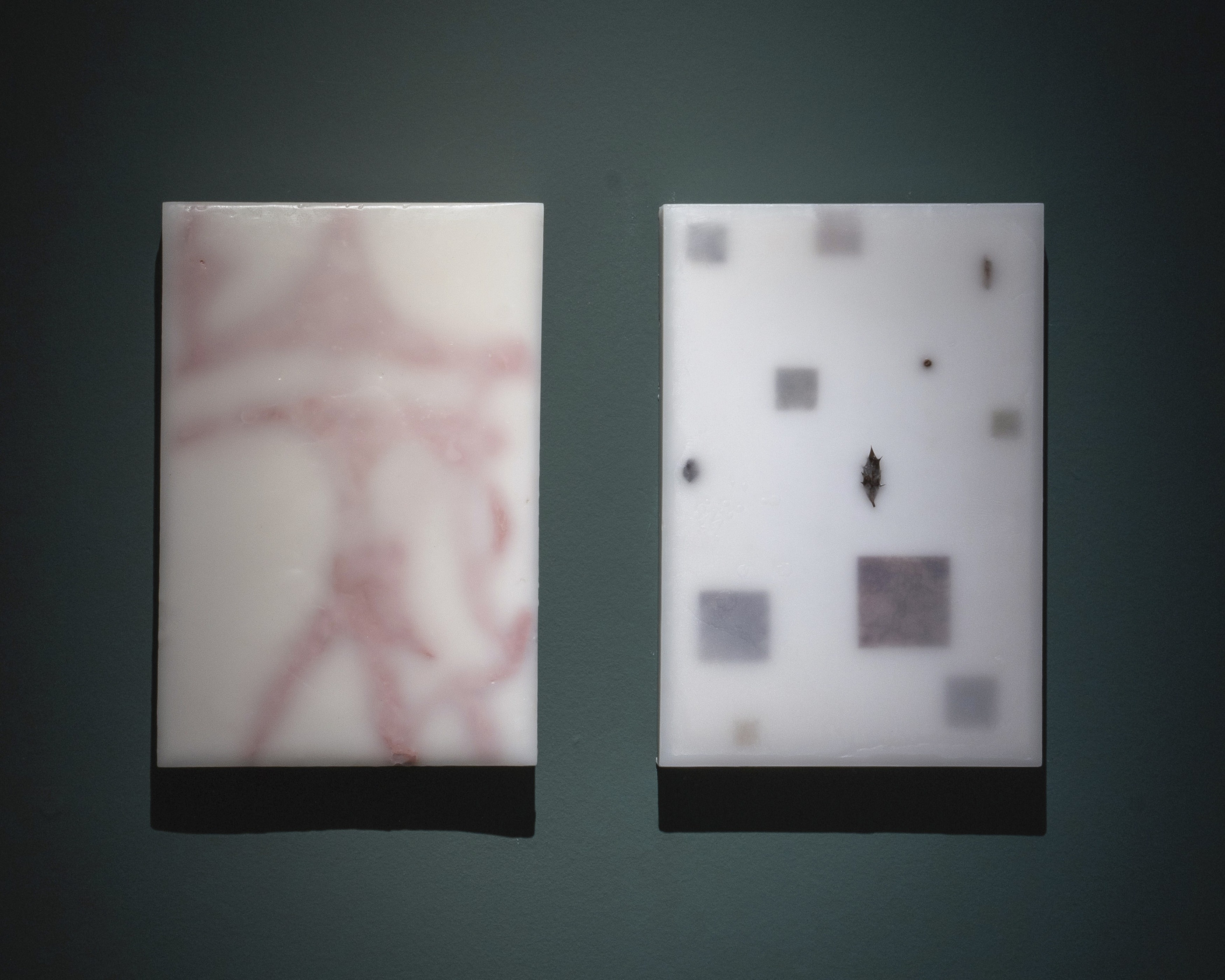
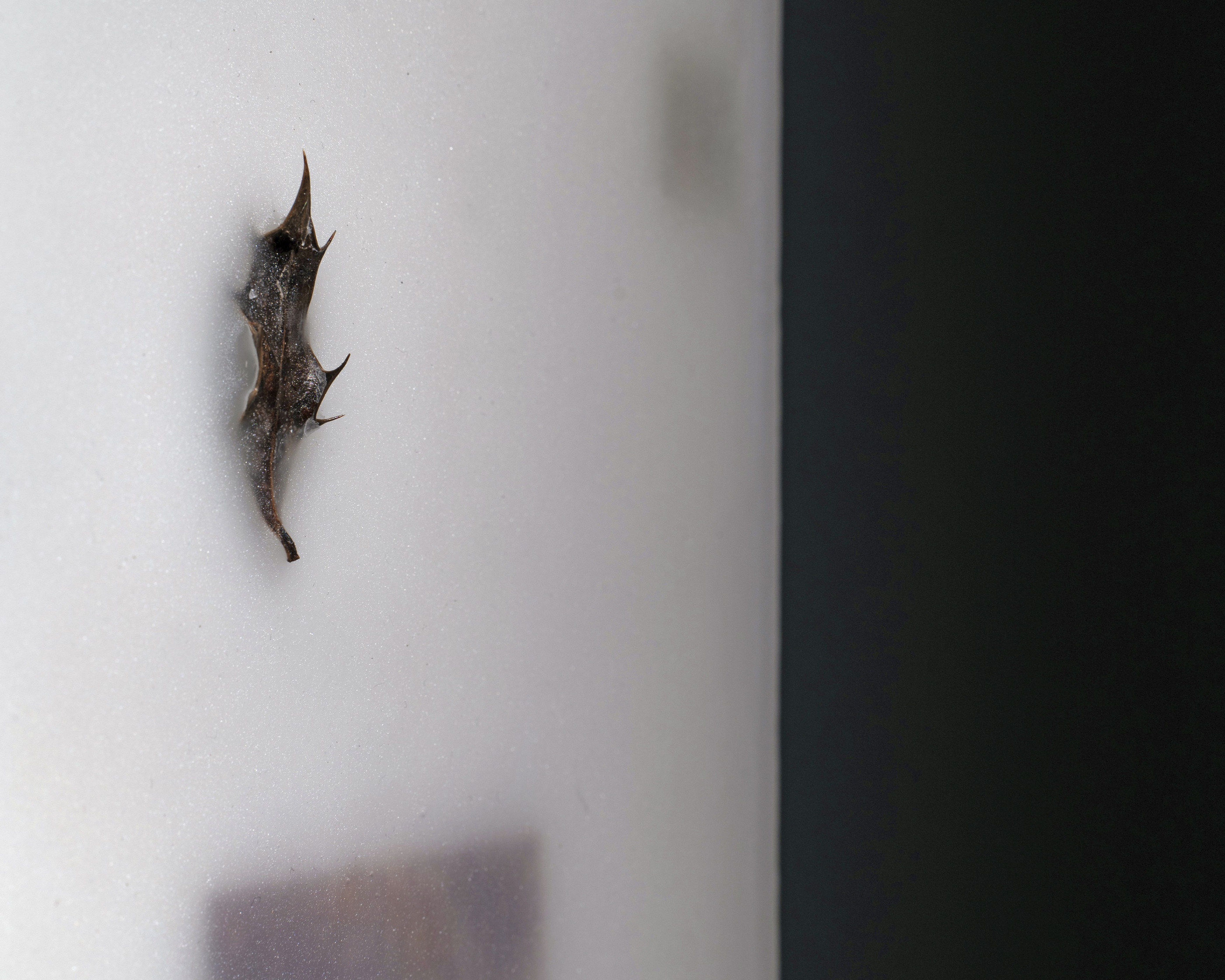
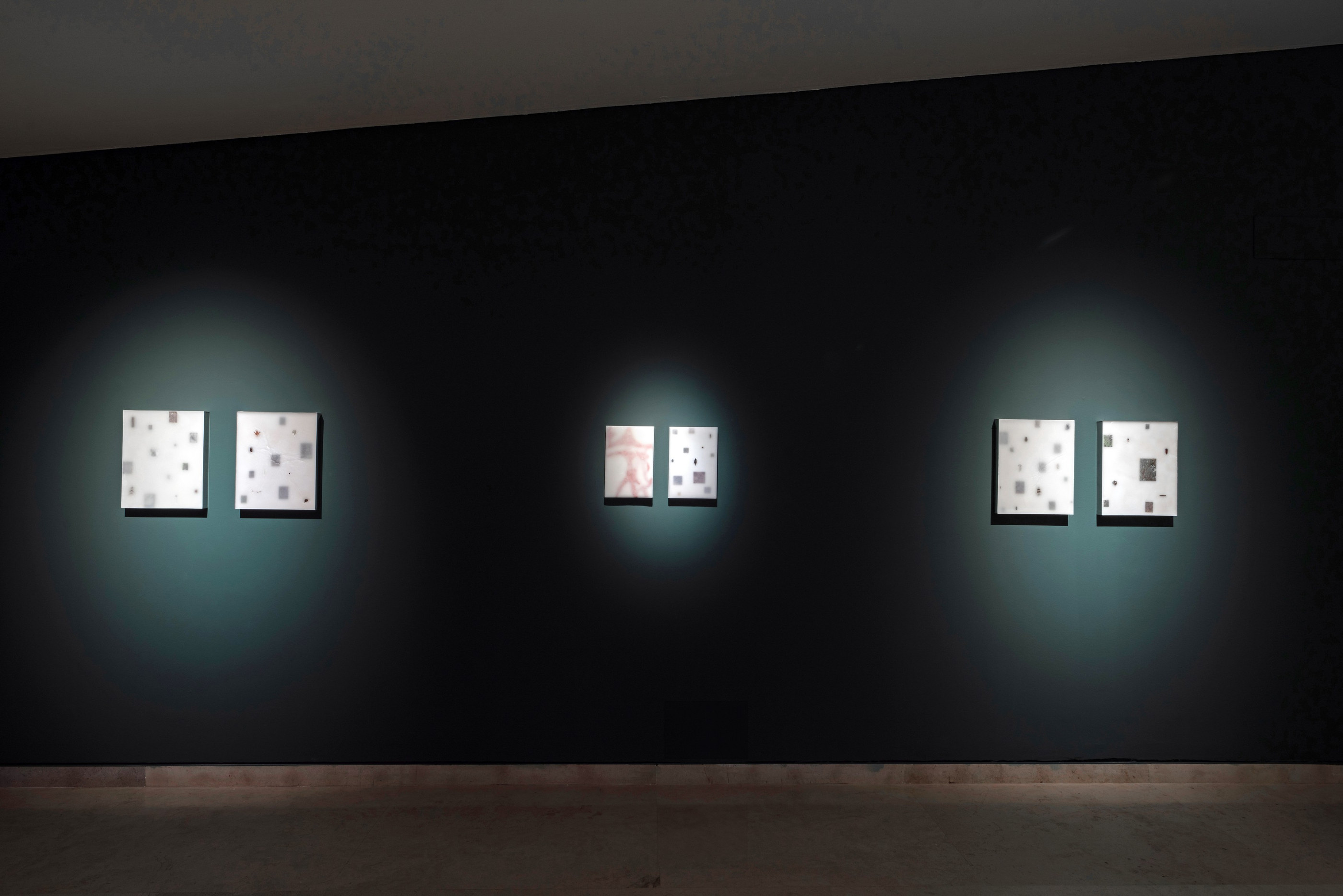
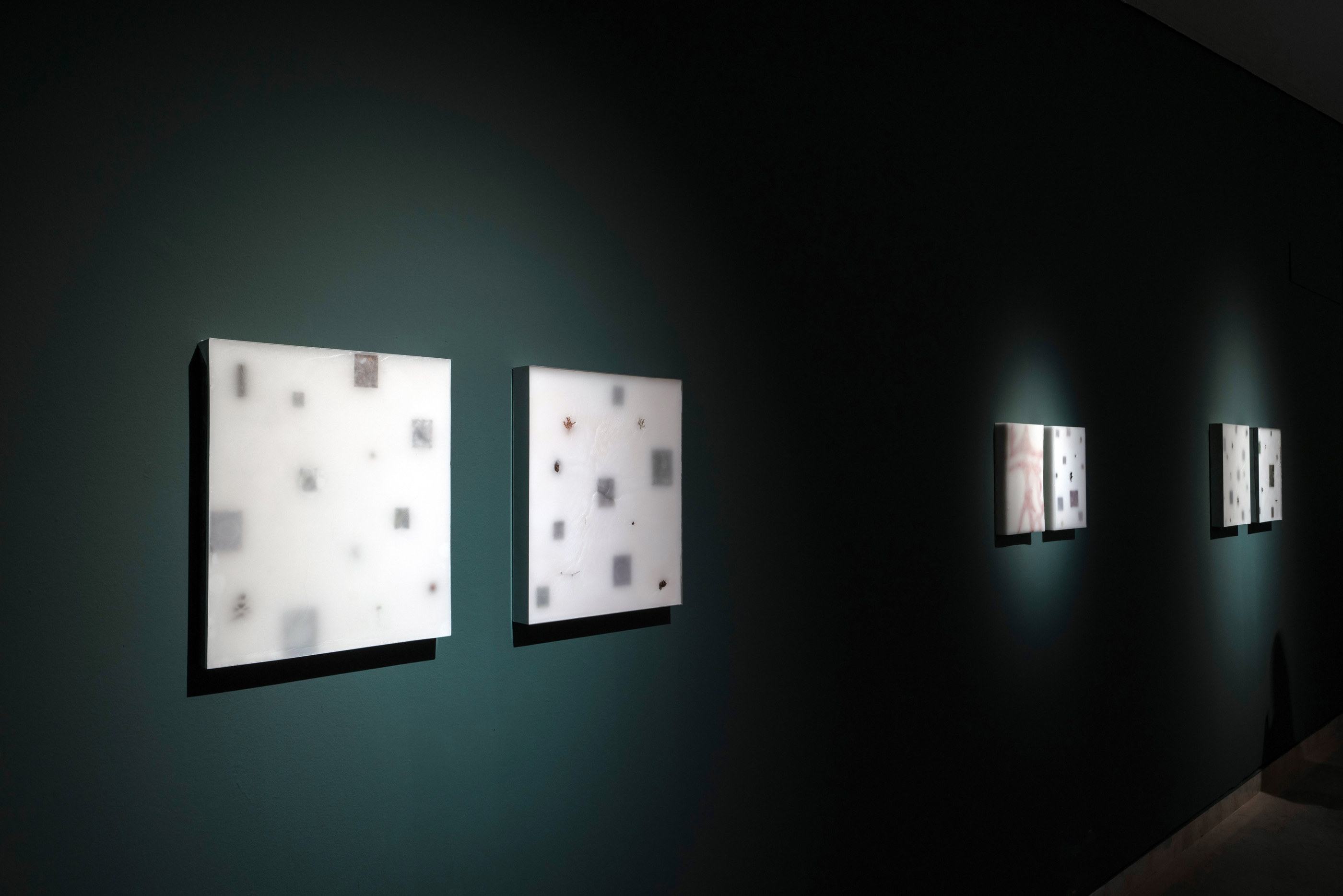
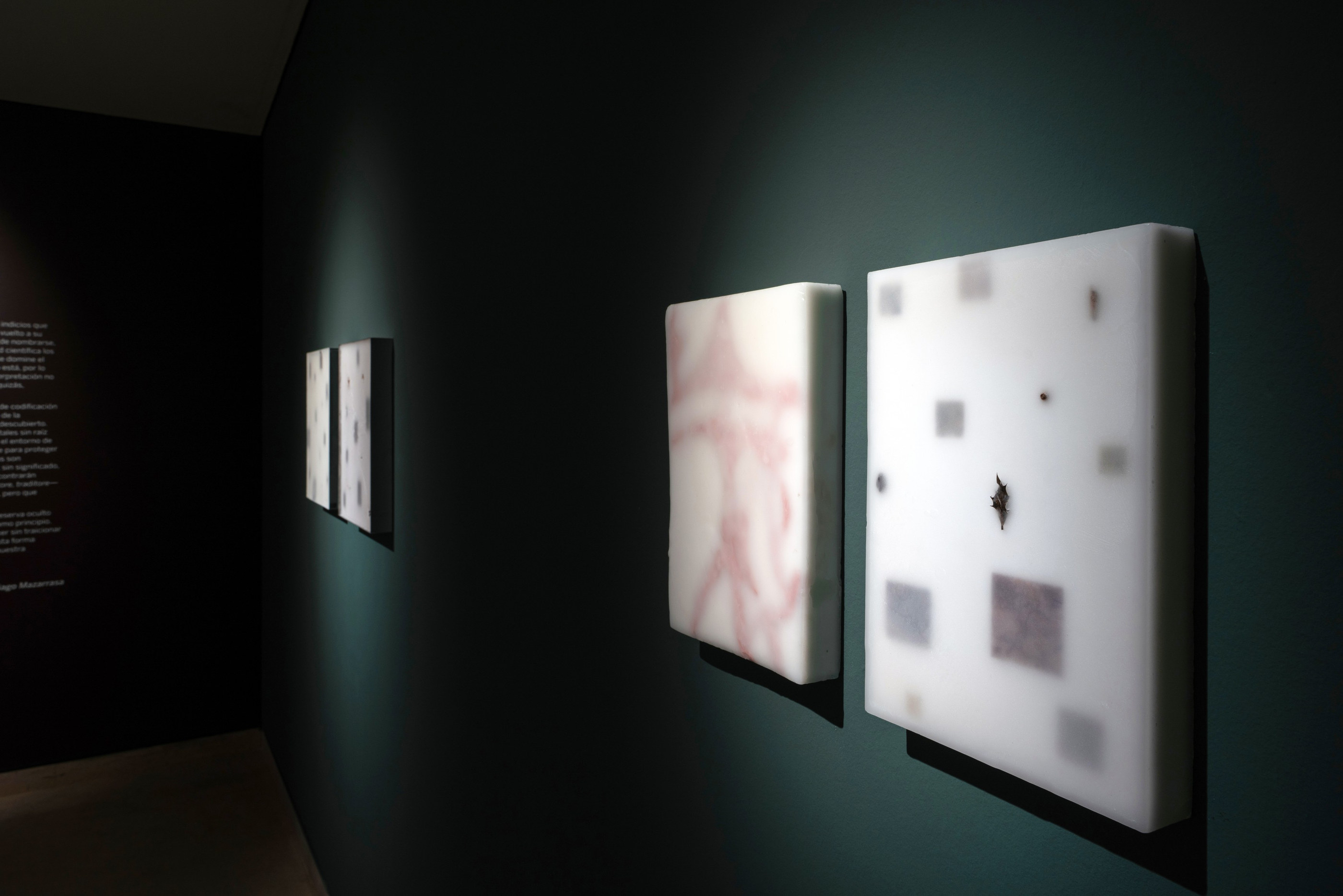
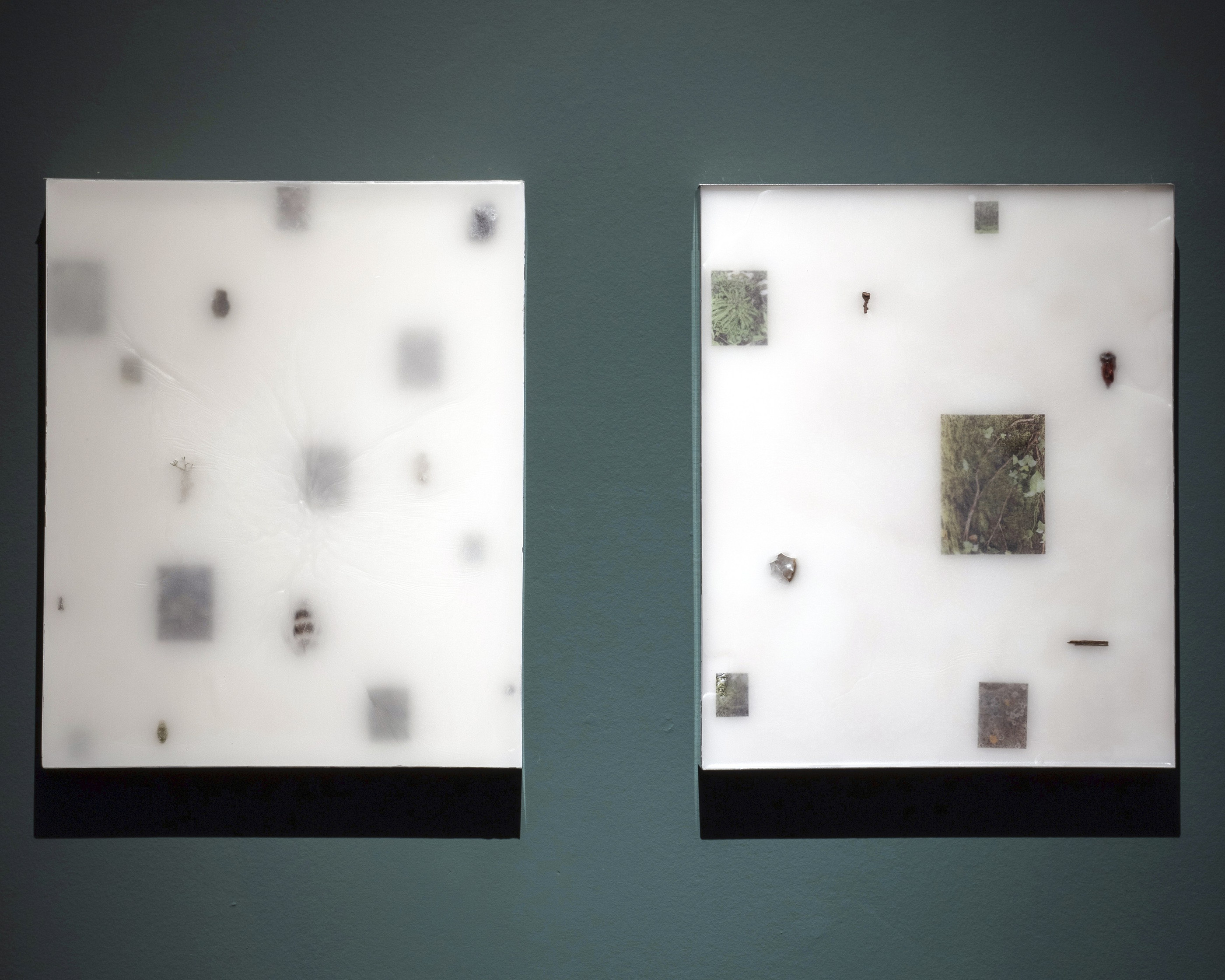
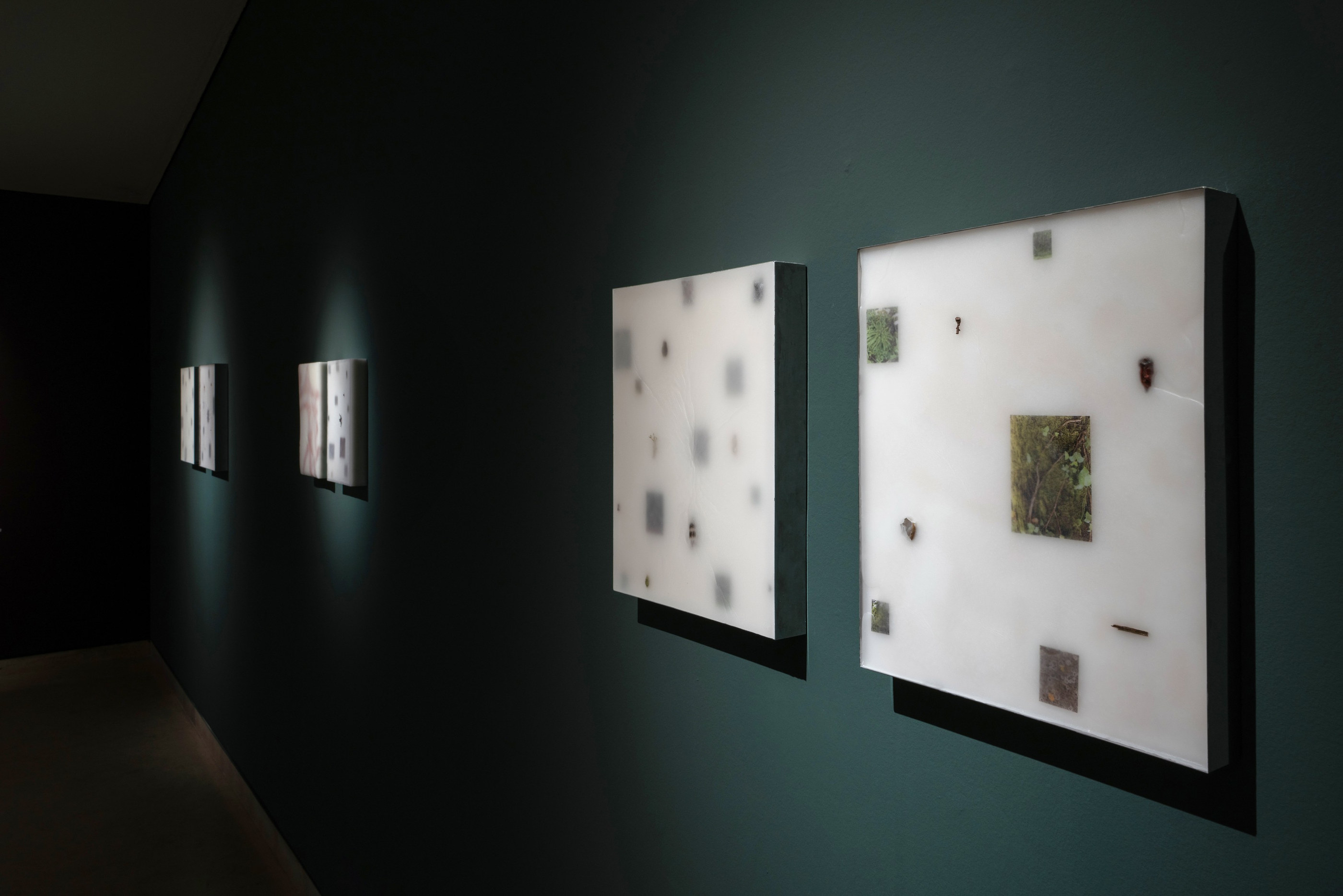
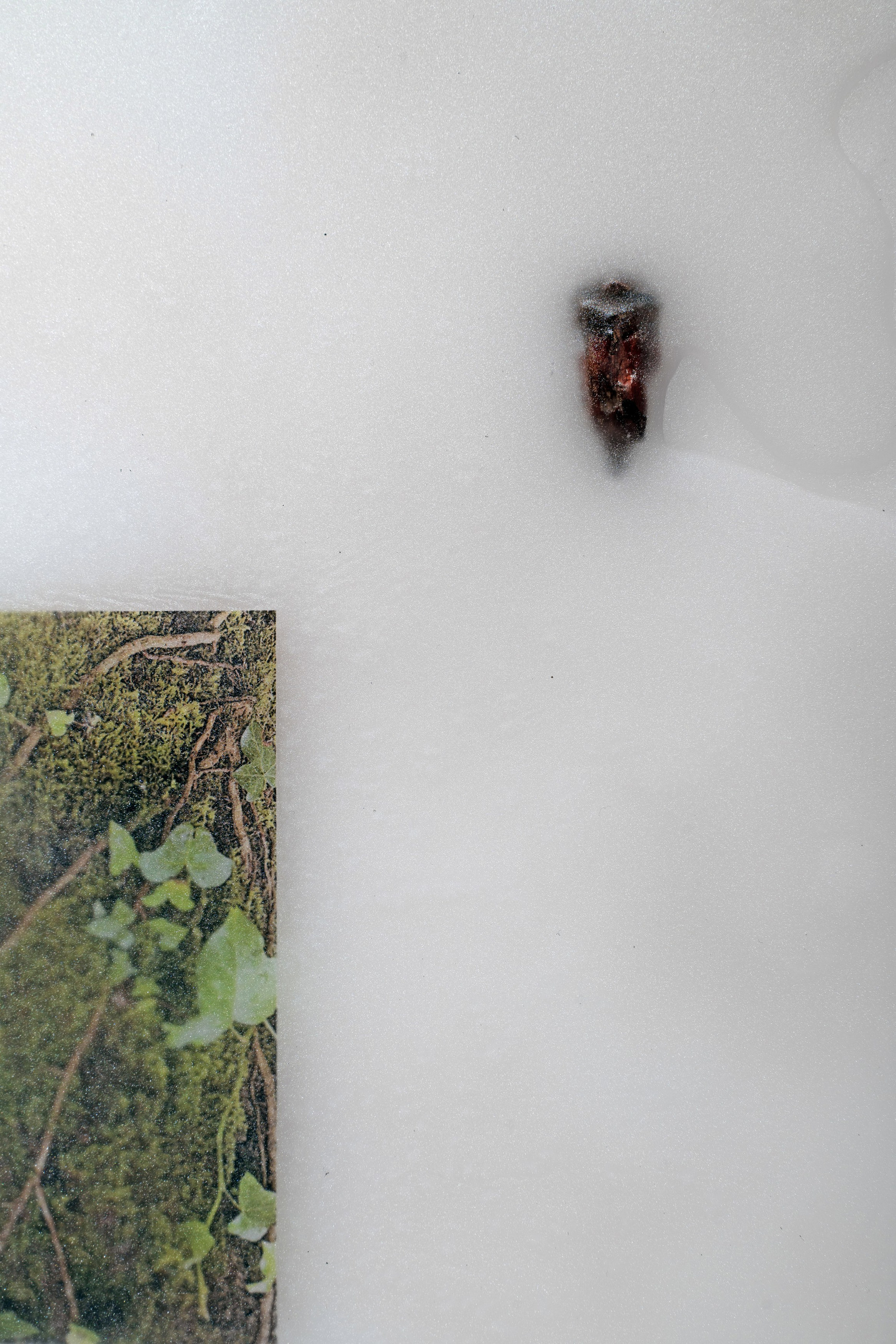
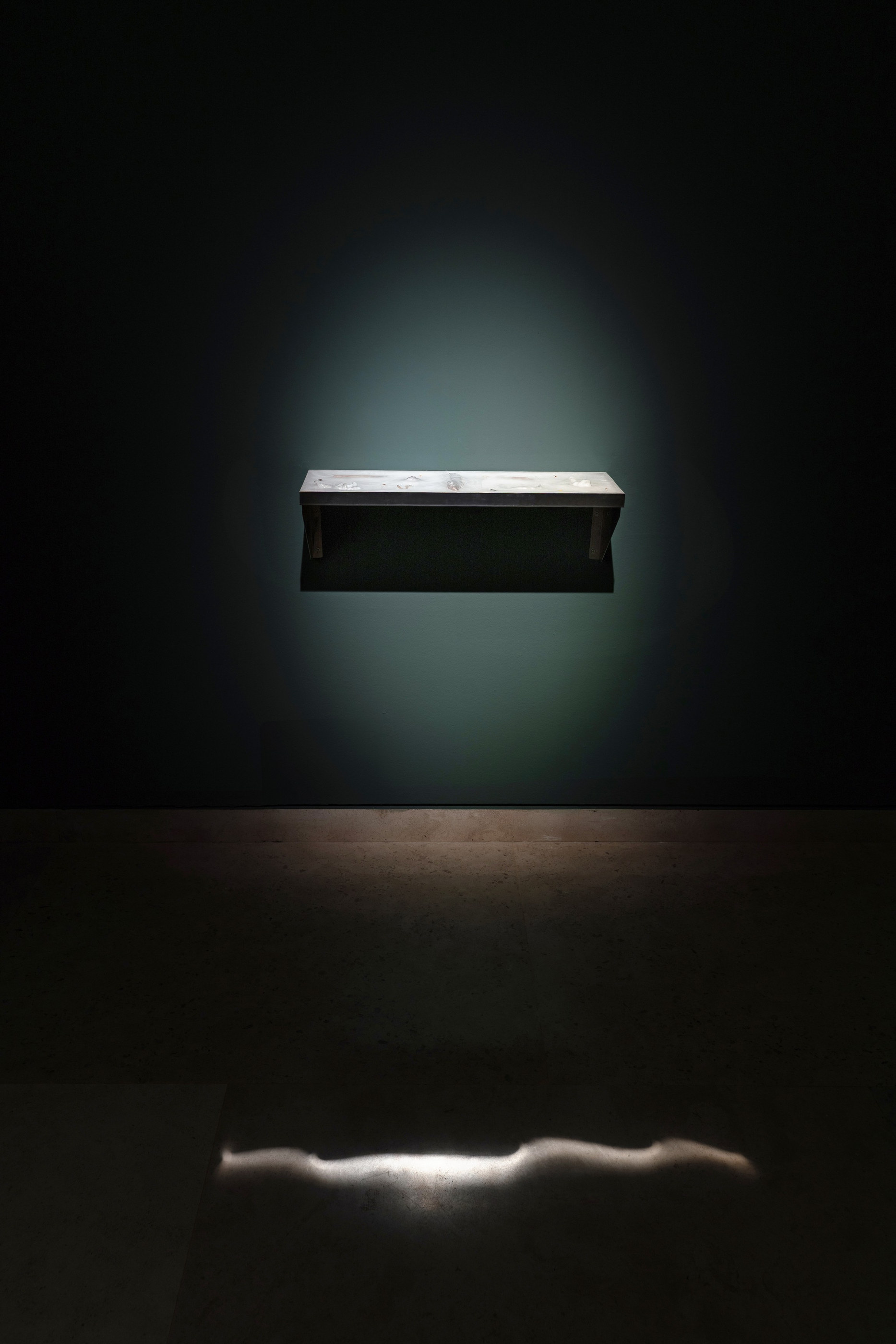
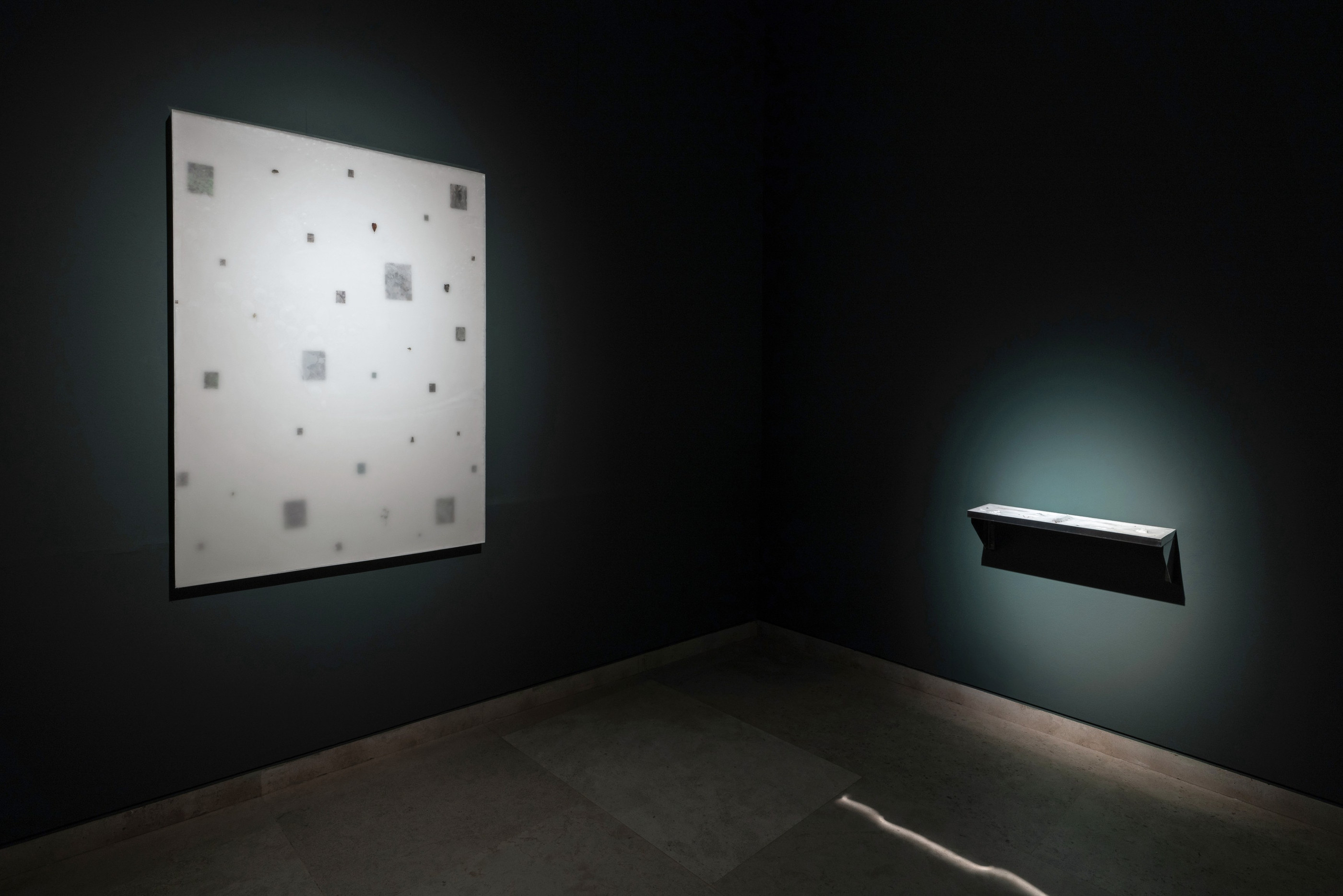
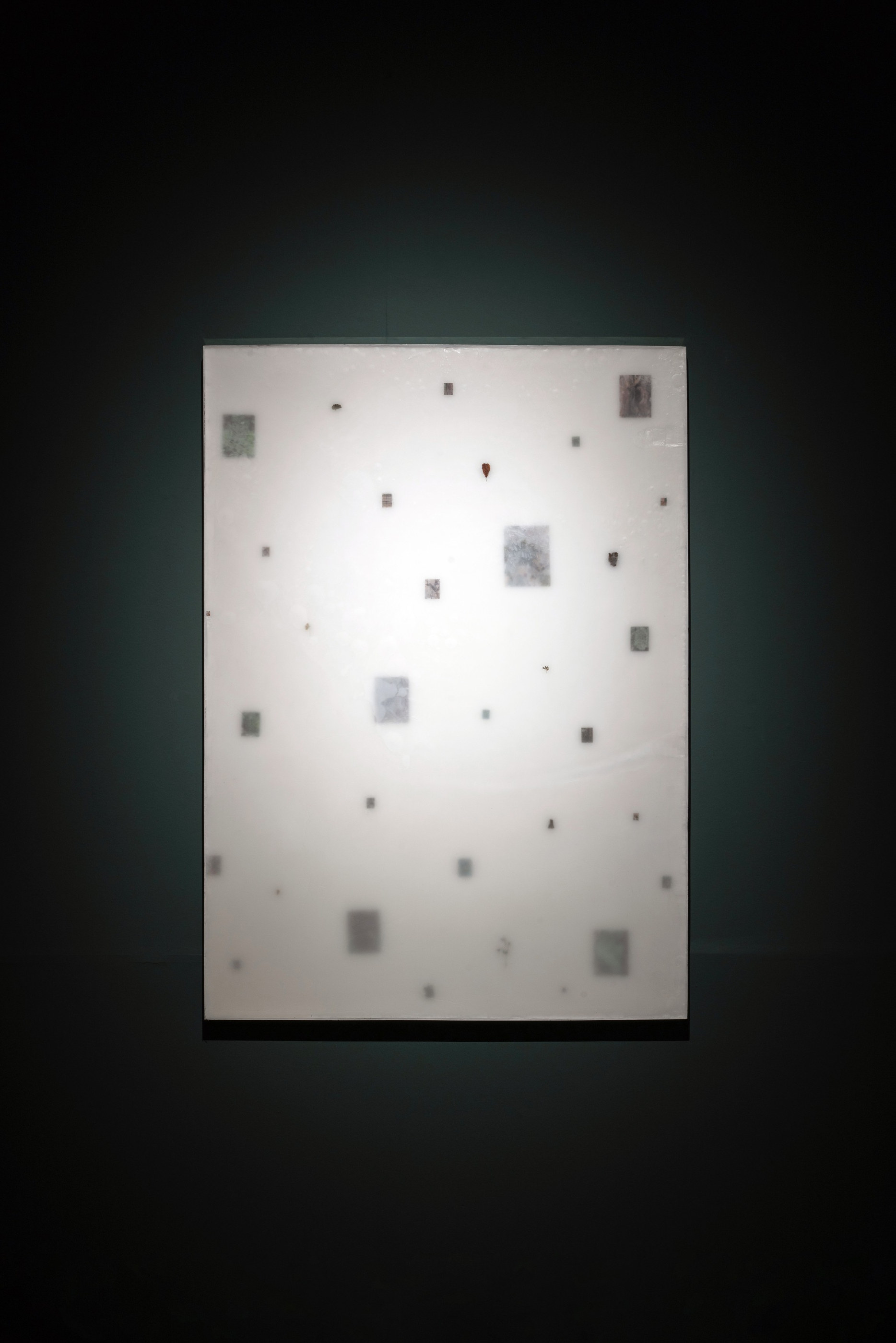
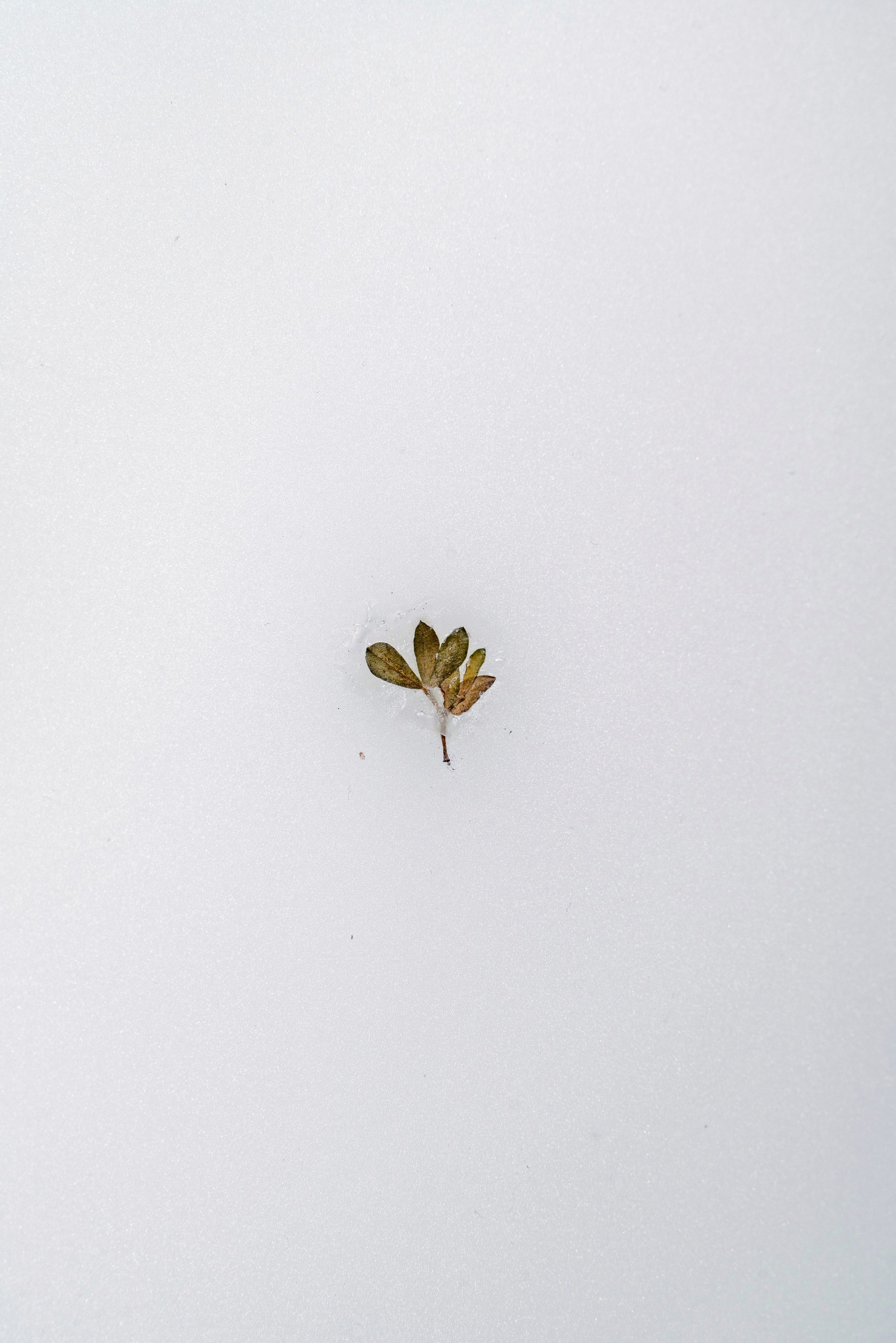
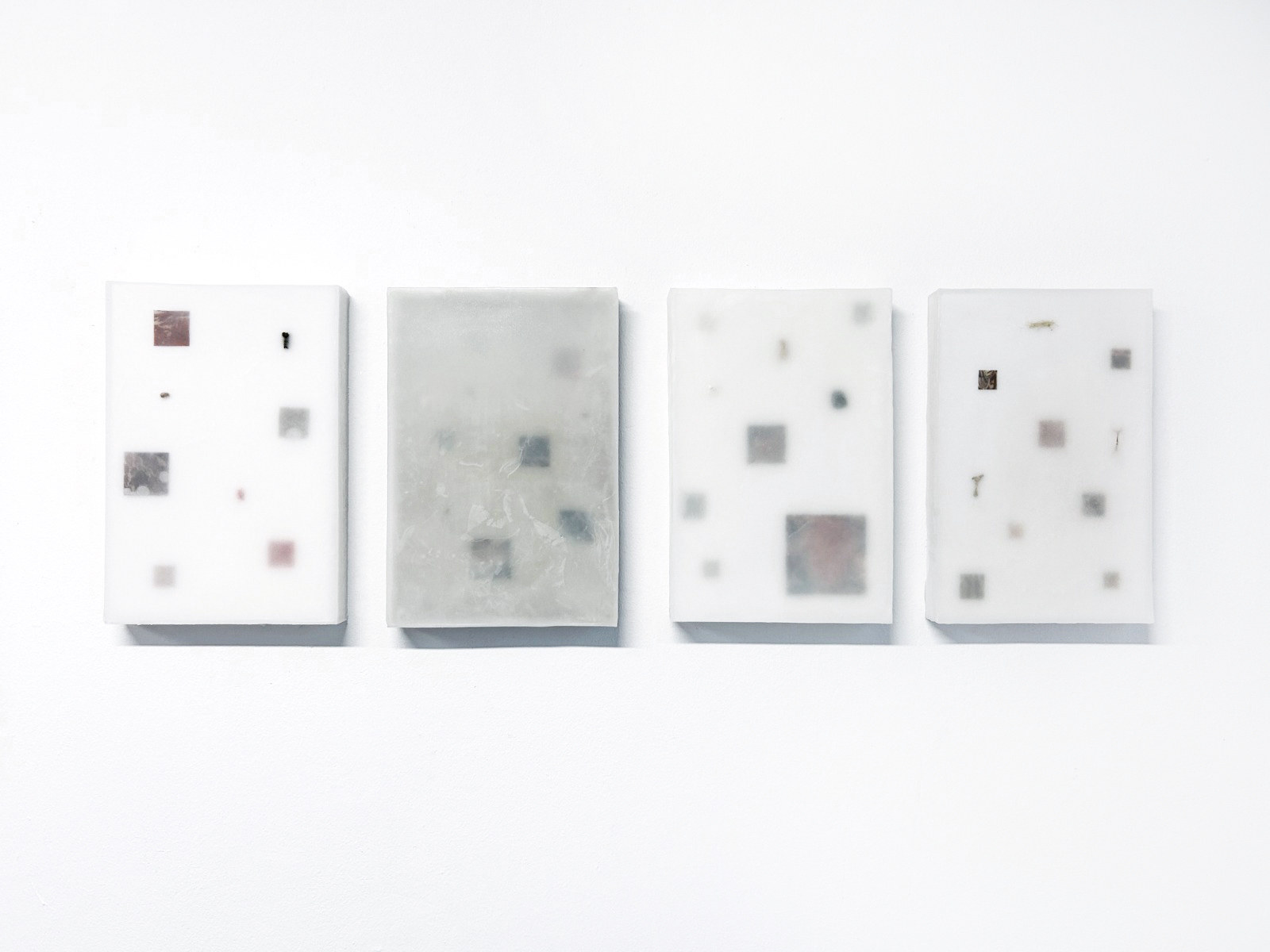
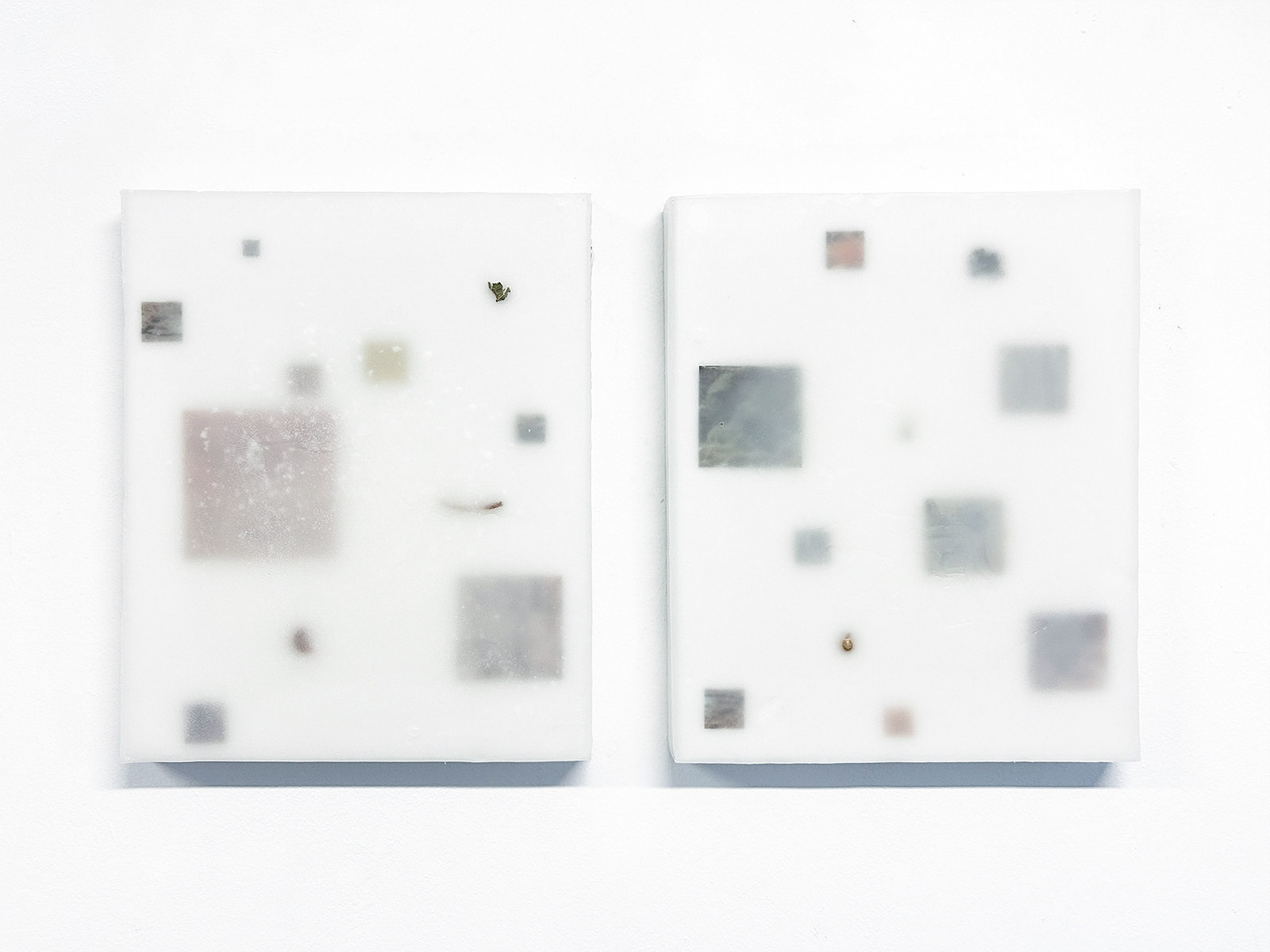
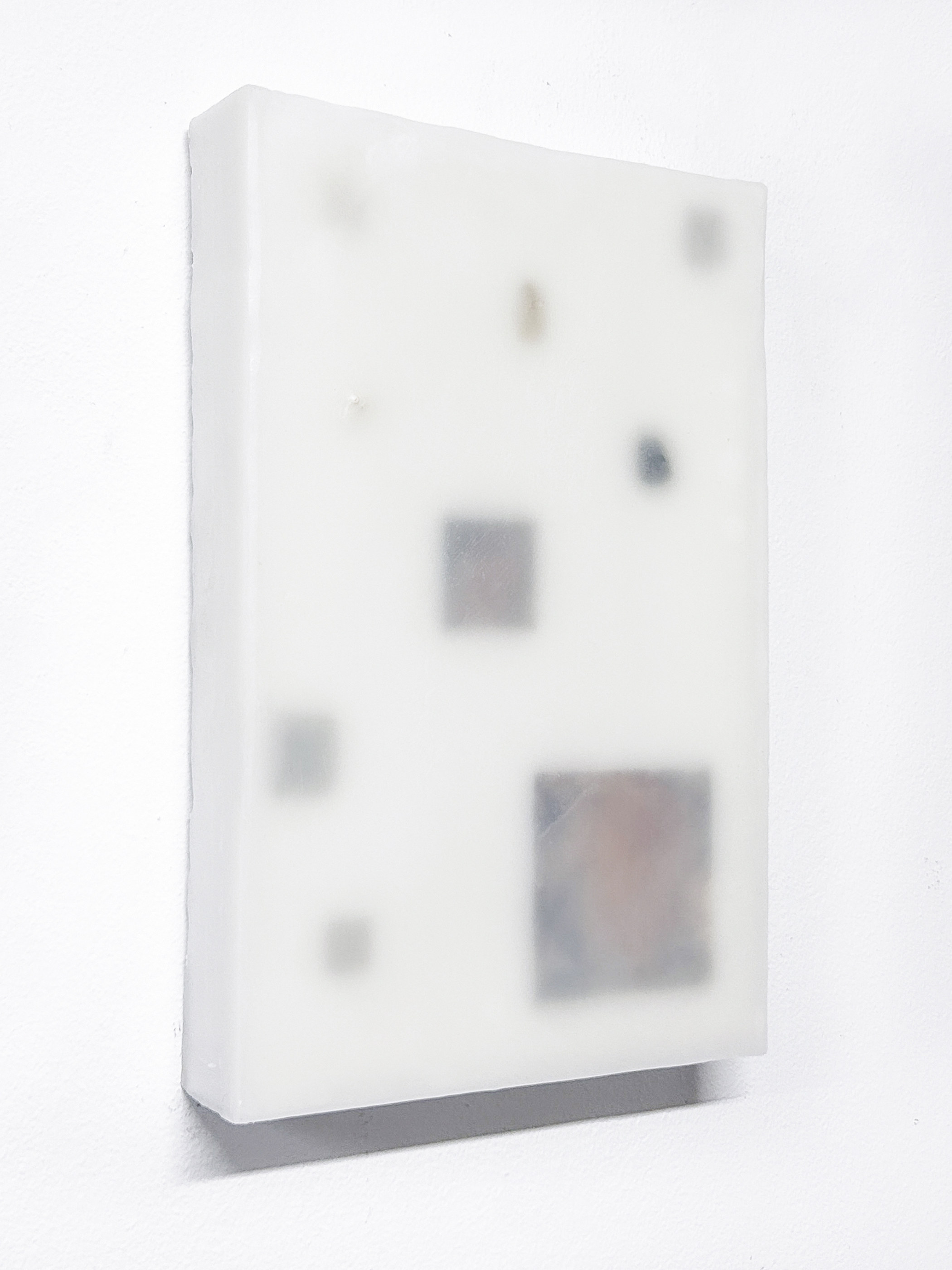
The pieces presented in this exhibition are articulated through a series of intra-actions between historiographic witnesses and phenomenological readings, giving rise to material and visual exercises that question the configuration of the past as a fixed and closed entity. Starting from a principle of structuring seriality—typical of the classificatory logics that sustained scientific modernity—the project inscribes itself within a genealogy of catalographic forms that shaped Enlightenment binomial thought. For example, the clustered proposal titled Recolección (2025) functions as a visual and material ecosystem where multiple references converge according to a phylogenetic logic—not through hierarchy, but through proximity, mutual implication, and historical divergence. The wax veils covering the surface of the canvas beneath which this ecosystem is arranged act as semi-opaque membranes that displace any univocal reading, reconfiguring the network of meanings toward a latent agency, in which the visible is held in tension by what is archived and potential.
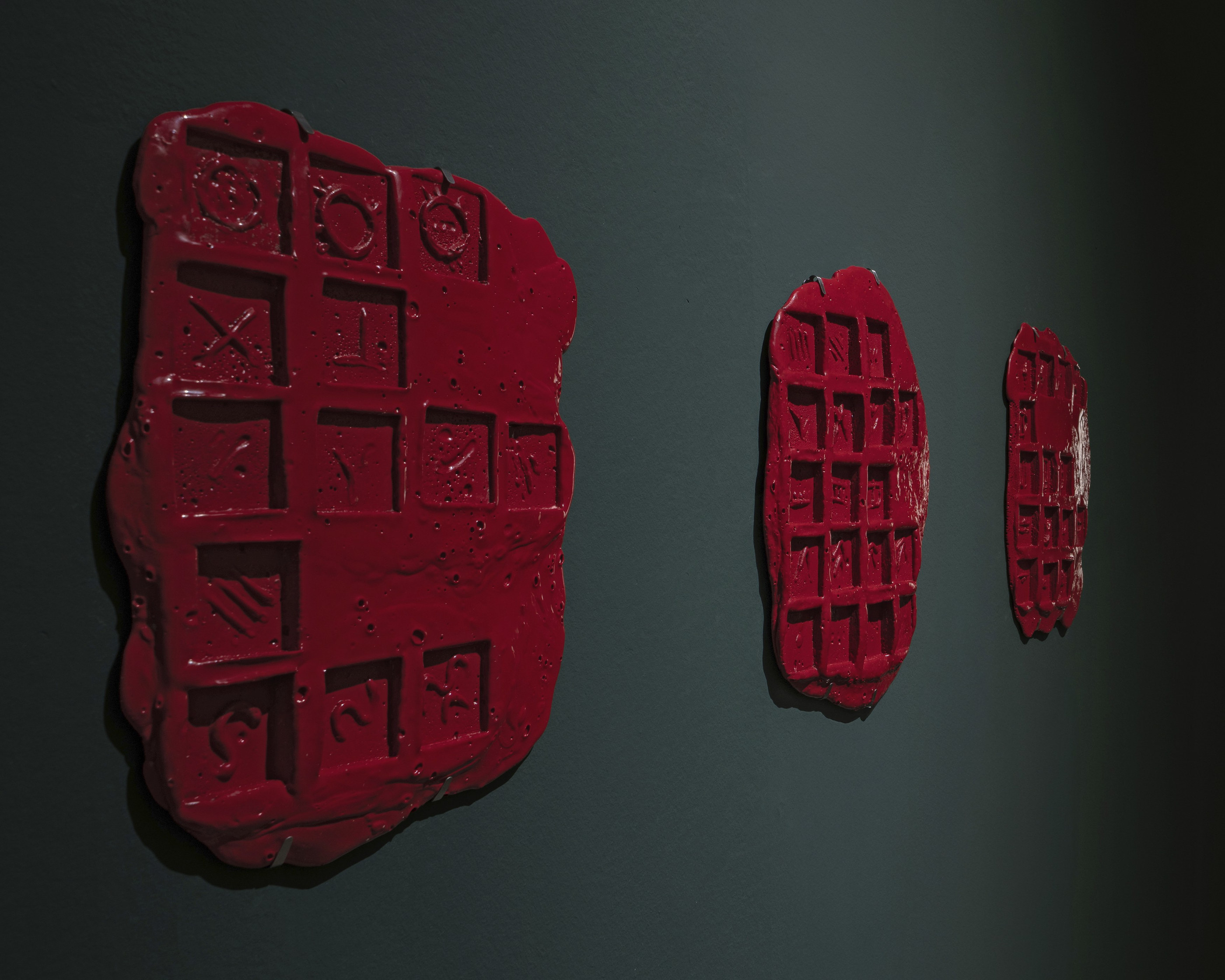
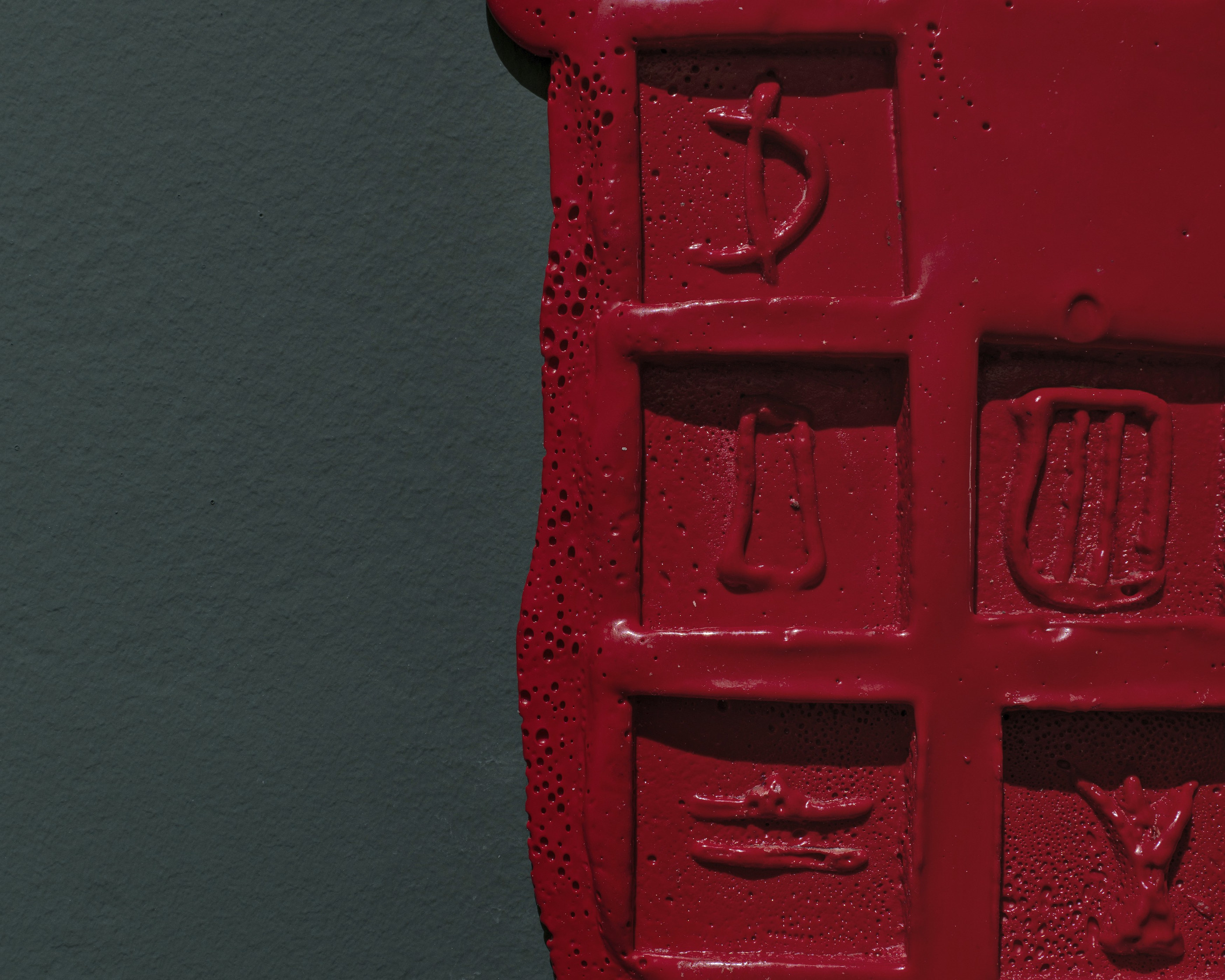
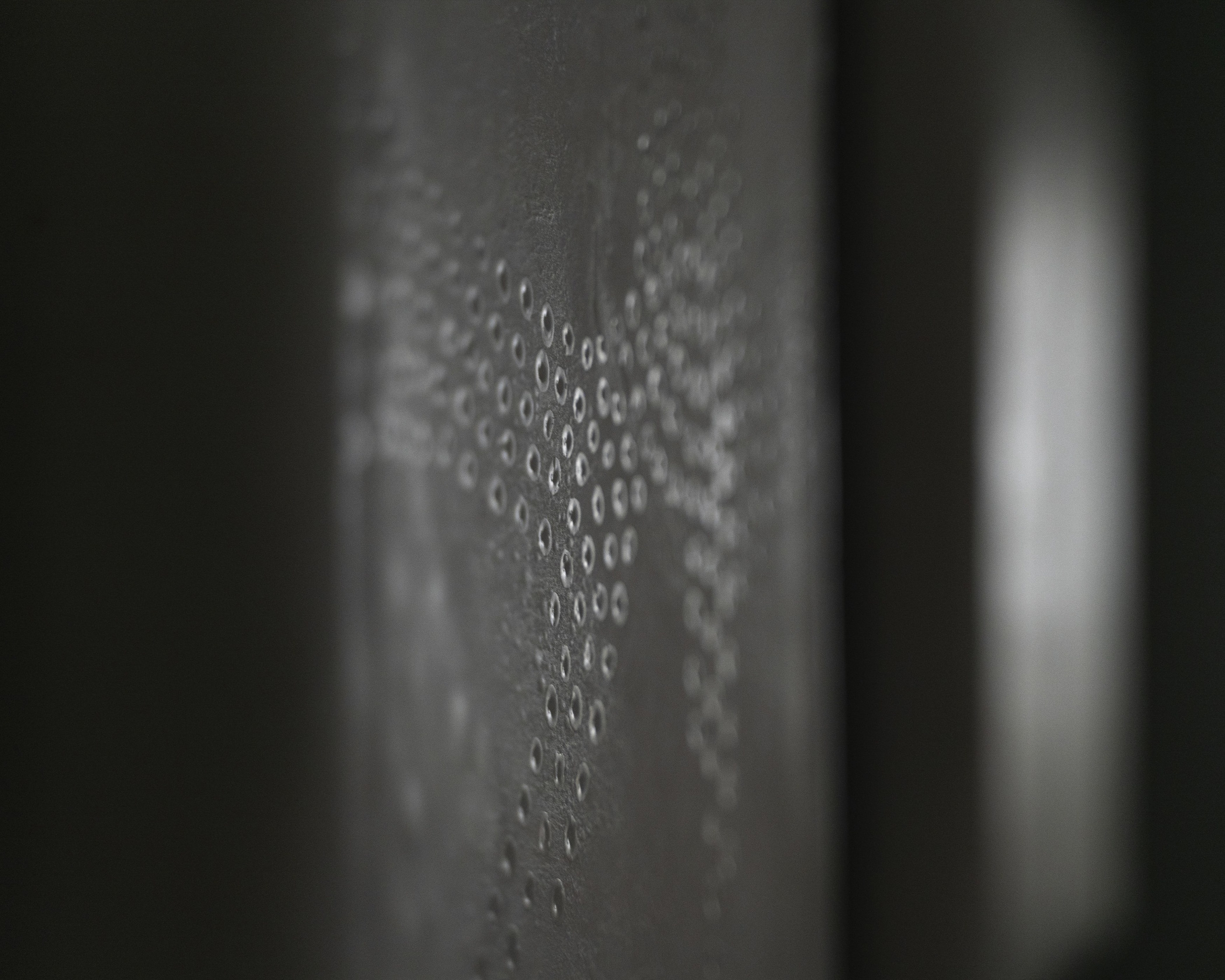
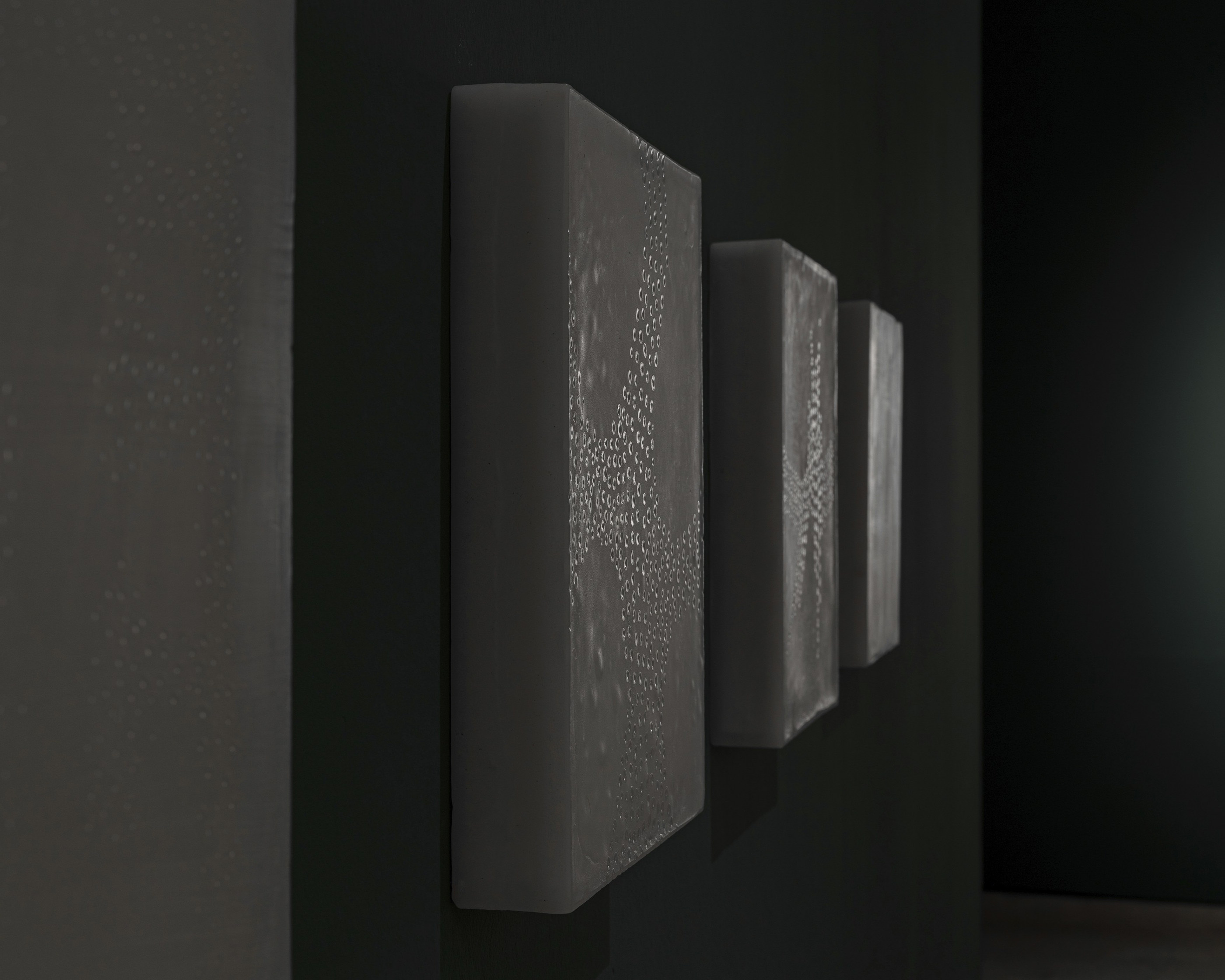
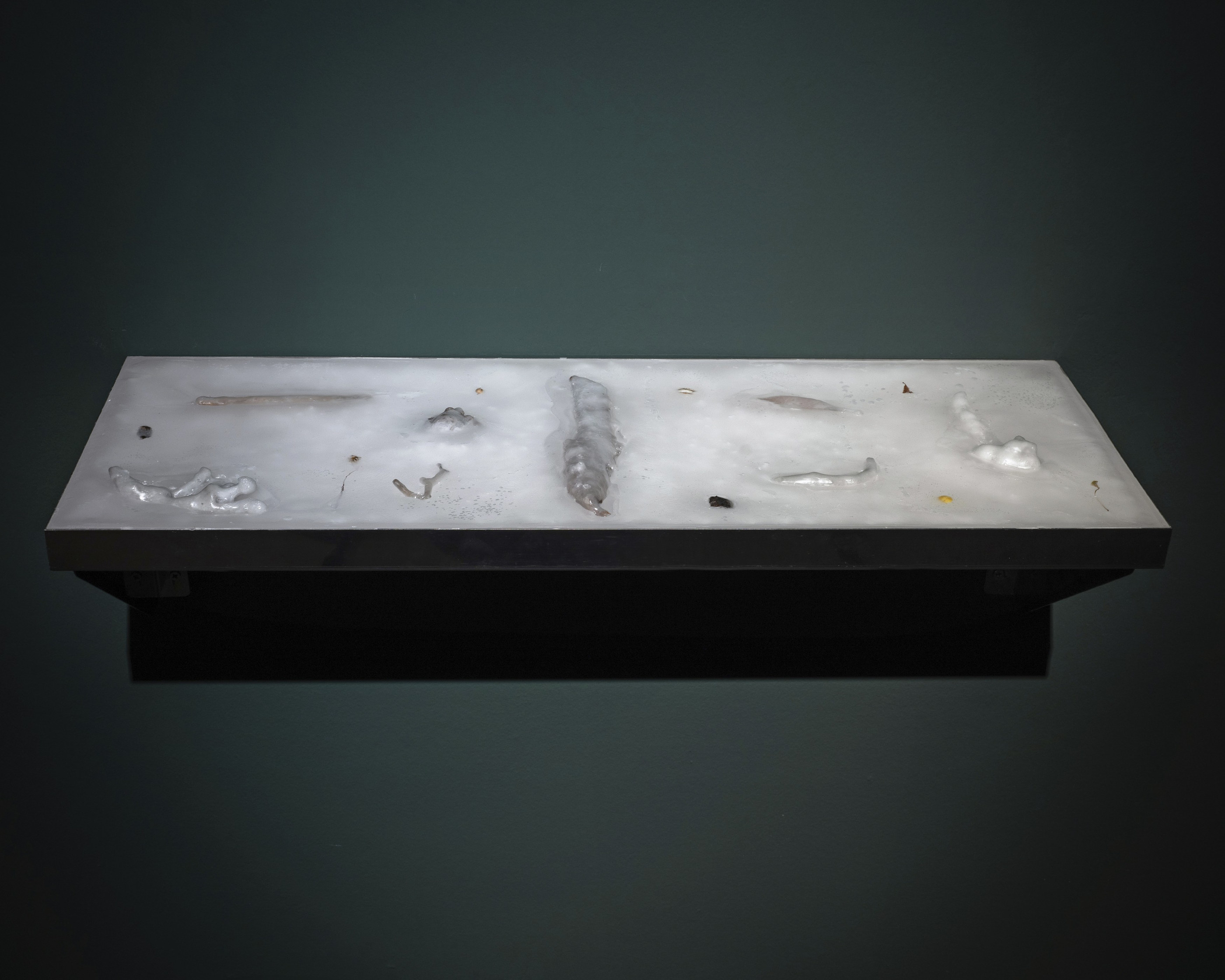
Likewise, other series that comprise the project—such as the writing exercises Puntiformes (2025) or the material compositions in red sealing wax titled Sellos (2025)—operate through a critical appropriation of the methodologies proper to morphological analysis, those that historically sought to reconstruct the past through the structured observation of persistent forms, fossil traces, or graphic imprints. These languages, originating in scientific systems oriented toward empirical and objective truth, are here reconfigured through a speculative logic that questions their own foundational premises.
Ultimately, far from reproducing the authority of systems, Manuel Minch proposes a displacement: rather than consolidating stable meanings, the discursive models composing this exhibition activate a semiotic latency, where form and inscription act as open fields and expanded gazes.
From the perspective of the linguistic and representational systems the artist activates, forms unfold in which the discursive models of science not only interpret the world but also produce agential potentials that shape reality itself. Perhaps that is why Cartailhac, in his belated gesture of repentance, exclaimed: “In vain we appeal to imagination, in vain to ethnography!”—as if sensing that all objectivity is nothing but a situated fiction, a construction that speaks as much of the one who enunciates as of that which he seeks to explain.